


The Parable of the Sower Explained
18 “Hear, then, the parable of the sower. 19 When anyone hears the word of the kingdom and does not understand it, the evil one comes and snatches away what is sown in the heart; this is what was sown on the path. 20 As for what was sown on rocky ground, this is the one who hears the word and immediately receives it with joy, 21 yet such a person has no root but endures only for a while, and when trouble or persecution arises on account of the word, that person immediately falls away. 22 As for what was sown among thorns, this is the one who hears the word, but the cares of this age and the lure of wealth choke the word, and it yields nothing. 23 But as for what was sown on good soil, this is the one who hears the word and understands it, who indeed bears fruit and yields in one case a hundredfold, in another sixty, and in another thirty.” [Matthew 13:18-23 NRSV]
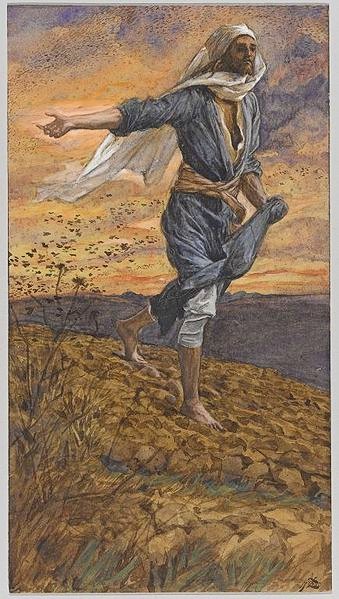
When the renowned Jesuit theologian Karl Rahner in his early writings proposed the thesis of “spirits in the world”, he wanted to explain how finite human beings could bridge the immense chasm and enter into communication with the infinite God. Humans, after all, are but five ounces of ash, and God is Pure Spirit. Rahner focused on creation and posited that the Creator had so designed the human creatures that, apart from our material composition, we also have a deeper spiritual reality that is capable of transcending the material world, to open our hearts to receive God’s Word when He speaks to us, and to enter into spiritual communication with the Divine.
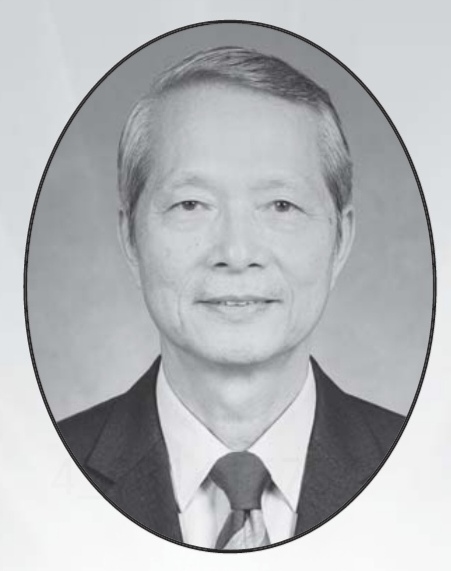
6th July 2026 marked the quiet passing of Martin S.K. Chai, a lifelong educator. A truly remarkable Catholic, Martin’s fruitful life witnesses to an openness to hear, receive and live God’s Word. He was as pure “a spirit in the world” as humans could be, one who thereby was, in Rahner’s follow-up famous thesis, “a hearer of the Word” that the Lord had spoken. He was a good soil in the Parable of the Sower.
We have known of Martin for more than three decades. So much has been so consistently spoken about him that upon his passing, we felt compelled to pay tribute to a life lived well. We do so by way of a spiritual and theological reflection on a life that bore witness to admirable humility, righteousness, and simplicity.
- Humility
Deep humility, we have come to realise, is one of the most difficult virtues to understand, much less to choose and live. Yet, Martin chose and lived a humble life with ease. Deepening one’s understanding of this virtue, Martin’s life has shown, is a lifelong practice. He did not talk about humility or how famous historical thinkers and spiritual giants approached the subject; he just quietly lived it.
After retiring from St Joseph’s Primary School as principal, he responded to the call to serve as principal of the St Joseph’s Cathedral Parish Tuition School. However, he attached a condition: he would only serve for free, a condition that left the management board in a quandary. The tuition school was doing well financially, and remunerated staff and workers decently. But Martin wanted “no remuneration”, insisting on what he heard the Lord said: “freely you have received, freely give” (Matt 10:8).
In Martin’s soul, we see a religious and spiritual person who knew that the moral person cannot boast. He lived with the knowledge that everyone who is saved stands on mercy, not on boastful performance. St Paul spent the first 11 chapters of his Letter to the Romans telling us that humanity stood on mercy and mercy is freely given, even by Christ dying on the Cross.
Martin likewise understood well the Lord’s emphasis on grace, generosity and communal service free from transactional thinking or personal gain. He remembered well that since God has given us time, talents and treasures without charge, we do best if we act as conduits of that grace to others. In his insistence on serving the Church community without pay while he was on official retirement, Martin exemplified a cheerful, willing, and intentional generosity rather than a transactional quid pro quo.
In the end, the tuition school board, in conscientious dialogue with Martin, resolved the quandary by finally persuading him to at least accept, not a full pay, but a token monthly stipend of RM500, a mere 10% of their original offer. Martin’s sacrificial service was a genuine self-giving as an act of faith that reflected his trust in God rather than material accumulations. He had his heart set on honouring God rather than on human recognition and praise. In Martin, we saw a truly righteous man in our midst.
- Righteousness
Humility, we are told, opens the door to wisdom because it removes our ego’s need to be right all the time (“I am right, I am always right, and only I am right!”). Humility thus makes us teachable. Righteousness teaches us to move away from outward hypocrisy or self-righteousness. It teaches us instead to cultivate an interior life rooted in humility, genuine faith, and grace. In Martin’s case, righteousness taught him to avoid at all costs actions that would scandalize the faith community. He would never give any ministry in which he served a bad name. An incident demonstrates this well.
Martin was a Communion Minister serving in the cathedral parish. He upheld the Eucharist as sacred and holy, and conducted himself in proportionate dignity and propriety. One day, when his teenage son had a scuffle in school, Martin felt that he could not in good conscience continue as a Communion Minister. He was mindful of the possibility of the faith community being scandalized to see him “distributing the most Holy and Blessed Sacrament in church” while his son “behaved badly in school”. He resigned in righteousness, despite the parish priest personally seeking to persuade him to stay on.
This incident yielded fruitful reflection at the time, and offers a helpful case study for the training of Communion ministers at all times. More so, around the same time, another Communion minister was seriously scandalising the community, and yet held on to his “position”, despite mounting complaints and communicants “changing queues” whenever he was on duty distributing Holy Communion at Mass. Eventually, even the very patient parish priest had no choice but to get the man to “stand down”.
These two sharply contrasting stories also impact on our view of ex opere operato. It is a Latin phrase which states that sacraments confer God’s grace automatically when administered correctly, regardless of the personal holiness (or lack thereof) of the priest or the subjective faith of the recipient. By this sacramental principle, the Church assures the people of a divine guarantee that so long as the priest properly performs the sacramental rituals, God guarantees that the inward grace is made available to them. It is an ecclesial protection devised by the official Church to protect the faithful against wayward or unworthy priests. While this doctrine unfortunately promotes the single-dimensional argument that “without the priests, there is no Eucharist” – blatantly ignoring the importance of Christ in the first place, and the presence of the congregation – it was an important device during the Donatist controversy of the 5th century. Donatists, with their strict moral code, argued that sacraments administered by sinful priests – the traditores (“traitors”) – were invalid. The traditores were bishops and priests who handed over the Holy Scriptures (to be burned) or betrayed their peers to Roman authorities during the persecutions. The official Church rejected the Donatists’ argument, with St Augustine famously arguing that Christ being the true minister of the sacraments, their validity cannot be ruined by sinful human agents. The Council of Trent (1545-1563) later formalized this doctrine in response to the Protestant Reformation.
There is, however, a serious drawback to the doctrine of ex opere operato. Particularly in places of priest shortage, bishops are keen to stress the “promotion of vocations” rather than to “kill vocations”. One must wonder what substance there is in talking about “vocations” when dealing with seriously unworthy (even criminal) priests. In any case, bishops are understandably zealous in keeping priest-numbers. As a result, priests who should not function in ordained ministries at all are retained (pedophile priests are a stand-out example), moved around from parish to parish if necessary. Unlike Martin Chai, who treasured the Eucharist heart, mind and soul and would resign as a Communion Minister upon a mere imagined scandal of his son’s scuffle in school, ex opere operato becomes a shield, unintended it may be, to keep highly scandalous priests, while “good”, but scandalized, parishioners are just expected to remain deaf and dumb like the three proverbial monkeys that see, hear and speak no evil. The parable of Martin Chai’s righteous resignation is a strong counter-cultural sign which the faith community ignores at its peril. While the historical-critical method of biblical exegesis helps keep the Church honest, the sacramental principle of ex opere operato may not.
- Simplicity
Thirdly, the quiet spirituality of simplicity is something those who know Martin commonly speak of.
Simplicity is a virtue highly valued by major world religions and ancient philosophies. Renowned Benedictine Sister Joan Chittister speaks of simplicity not in terms of deprivation at all, but as an intentional choice for spiritual freedom. She stresses three core dimensions in simplicity, amongst others.
- First, simplicity points to the “purity of heart” that searches for the essence of life instead of “grasping after its frills”. A simple spirit sees the beauty of the present, whatever its shape or “lack”. The simple person cultivates a healthy sense of “enoughness” and is truly able to enjoy what there is and being grateful for it. Simple spirits are thus free to be where they are and do not mourn where they are not. They are willing to have it known that they are “from Bethlehem rather than from Beverly Hills.”
- Second, simplicity reveals a “habitually relaxed grasp”. There is no undue attachment to material things and the approvals of the clamorous world. It easily lets go of the need to control or possess. It enjoys companies, relationships and things in life for their own sake, without keeping a constant eye on their status. A relaxed grasp points to a sense of sufficiency, simply happy without the need to constantly look for the “rewards” of a superfluity, or to flaunt in surfeit. A simple spirit knows the difference between happiness and reward: “Blessed are the poor in spirit”. It does not relate the Beatitudes to a transactional system in heaven symbolized by the ways of the greedy world around us.
- Third, simplicity prioritises the divine. Striping away the flashy, the transient, and the superficial, a simple person is better able to centre the heart and to create the inner space for deep reflections on the wisdom of God. We recall one religious sister, always impatient with all and sundry, could care less if she hurt anyone by her words and actions. One day, she went overboard in her nasty behaviour and she froze in instant regret on seeing the silent tears running down the cheeks of a woman grossly treated by her. She ran to the chapel and cried her heart out. She “saw” her ugly self and turned wholeheartedly to Christ in repentance, crying, “Help me Lord, I don’t want to be like this.” Her very surrender to Christ changed her. She woke in the following morning a new person. From then on, her first prayer upon rising every morning was: “Lord, may everything that I do today, be done out of love for you. Amen.” A converted soul prioritises the divine.
We learned from Anna, Martin’s widow, that before his passing, Martin insisted on a simple funeral service – no fuss, no big publicity, no acceptance of customary bereavement relief packages in cash or kind, “do not inconvenience friends and relatives”. This consistent insistence on simplicity in death as in life, instantly reminds us of Zhou Eng Lai, the great Chinese statesman, diplomat, and revolutionary who served as the first Premier of the People’s Republic of China from October1949 until his death in January 1976. He had insisted on a simple funeral when he died – no overblown state-burial, no mausoleum, his ashes to be scattered across rivers and land of China. His widow, too, had insisted on his consistent simplicity in death as in life. A visit to the archeological preservation of his office and accommodation in Chongqing is good for the soul. The sheer simplicity of the life of this great man in modern Chinese history is awe-inspiring.
Martin led a simple and caring life. A teacher at the primary school disclosed that on the day of his retirement, staff and students cried. His caring spirit is reflected as well in his founding membership of the Yayasan LaSallian Kuching (YLK) where he remained a committee member from 2013 to 2018. At the end of his funeral Mass, friends who spoke with us uttered in unison their admiration for a man who, because he lived simply, he lived well. Martin exemplified an admirable “spirit in the world” who heard well Christ’s humble servanthood in Phil 2:5-11 and God’s blueprint for a good human life:
“He has showed you, O man, what is good;
and what does the Lord require of you
but to do justice, and to love kindness,
and to walk humbly with your God?” (Micah 6:8)
Copyright © Dr. Jeffrey & Angie Goh, August 2026. All rights reserved.
To comment, email jeffangiegoh@gmail.com.