


23 For I received from the Lord what I also handed on to you, that the Lord Jesus on the night when he was betrayed took a loaf of bread, 24 and when he had given thanks, he broke it and said, “This is my body that is for you. Do this in remembrance of me.” 25 In the same way he took the cup also, after supper, saying, “This cup is the new covenant in my blood. Do this, as often as you drink it, in remembrance of me.” 26 For as often as you eat this bread and drink the cup, you proclaim the Lord’s death until he comes.
27 Whoever, therefore, eats the bread or drinks the cup of the Lord in an unworthy manner will be answerable for the body and blood of the Lord. 28 Examine yourselves, and only then eat of the bread and drink of the cup. 29 For all who eat and drink without discerning the body eat and drink judgment against themselves. [1 Cor 11:23-29, NRSV]
Every Christian is called to help build the kingdom of God on earth as in heaven. Every Christian is called to mission. The Church is missionary in nature.
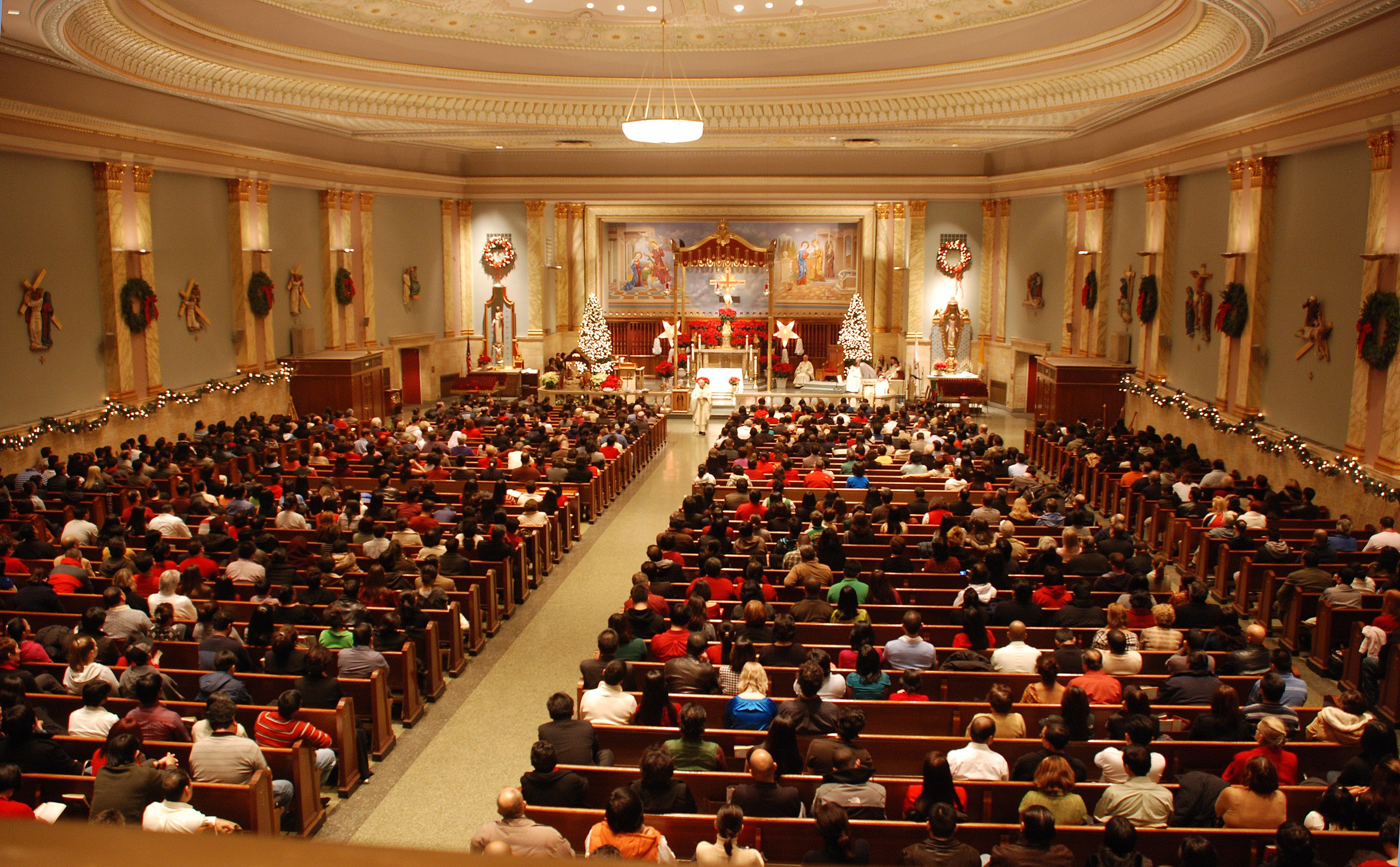
The Sunday congregation knew that the preacher was not being absurd when he said in his homily: “The Eucharist is not meant for devotion…” On his recent annual visit to Kuching for mission appeal, this seasoned missionary priest of Malaysian origin serving in Kenya called Fr Francis chose to say “not”; he did not say “not just”. But the congregation knew better than to accuse him of diluting the power, the attraction and the beauty of the Blessed Sacrament. They knew he aimed to challenge them to think and, if so challenged, to act in accord with the kingdom-building mission of the Lord Jesus Christ instead of resting content adoring Jesus in the Eucharist and doing nothing else, imagining themselves holy. For otherwise, their “devotion to the Eucharist” risks being quite empty. Every Christian is called to help build the kingdom of God on earth as in heaven. Every Christian is called to mission. The Church is missionary in nature. After celebrating every Christmas, believers must know that the work of Christmas begins.
The Lord came to serve, so are disciples expected to serve
The celebration of the Eucharist is the best corporate prayer of the Church. The Eucharist is “the source and summit of the Christian life” (Lumen Gentium, 11; CCC, 1324). The faithful, however, may be a little less conscious at Sunday Services about the Eucharist being Christian life itself. They are perhaps even less conscious that we have the opportunity to attend Mass, precisely because Christ Jesus had died for us on the cross to offer his life – his body and blood – to nourish and inspire his disciples as pilgrims of hope.
In all this, we would be people suffering from serious amnesia if we forgot that the Lord Jesus “came not to be served but to serve, and to give his life as a ransom for many” (Mark 10:45). Towards the end of his public ministry, as the Lord gathered his close disciples for a farewell dinner (“the Last Supper”), he sacramentally symbolized his sacrifice through the offering of bread (his “body” broken to be shared) and wine (shed for the new covenant in his “blood”). Enshrined in Mark 14:22-25, Luke 22:18-20, Matthew 26:26-29, and 1 Cor 11:23-25, what the Church later describes as the Institution of the Eucharist is a powerful call to all disciples to learn to live a life of service and sacrifice in memory of the Crucified Lord. In imitation of the Master, we are to do what he had done, that is, to dedicate ourselves to the life-mission of kingdom advancement. A Eucharistic faith requires acknowledging not only the real presence of Christ in the Eucharist but, even more, living according to his teachings.
The Church fails wherever Christians suffer from an amnesia, neglecting the very command of the Lord to “do” this and giving scant attention to the Lord’s “new covenant”. All beautiful talks on the priority of “being” over “doing” seem quite out of place in this context, and risk being branded as clever cover-ups for failure to put hands and feet to prayers.
Two Gospel stories of what the Lord did
The Christian life modelled by the Lord Jesus is always pressing forward on his kingdom-work. Take, for example, the story of Jesus choosing the Twelve Apostles in Luke 6:12-19. Jesus, as always before executing an important decision, first went up to the mountain to pray; it was an “important” prayer, we might say. But he did not linger in prayer; he did not remain on the mountain, content on “devotion” to the Father. Rather, he came down from the mountain and engaged the people and, in this case, to choose the Twelve to assist in his mission. In this context, Pope Benedict XVI adds a crucial insight about the mission of the Church and the mission of Christ being inseparable. We must do what the Lord did, in memory of him. The scholar-Pope puts it this way:
- “The Twelve Apostles are the most evident sign of Jesus’ will regarding the existence and mission of his Church, the guarantee that between Christ and the Church there is no opposition: despite the sins of the people who make up the Church, they are inseparable.”
The link between prayer and kingdom-work is even more pronounced in the Transfiguration episode. Resting content in adoration of the Blessed Sacrament – Christ in the Holy Eucharist – is not going to do it. If any reminder is needed, Peter’s “Lord, it is good to be here. Let us build three tents…” up on Mount Tabor where the Transfiguration took place was abruptly interrupted (“As he was speaking” – Matthew 17:5) by a voice from beyond the cloud, for Peter knew not what he was saying (Mark 9:6; Luke 9:33). In sharp contrast to Peter’s idea of a permanent and idyllic residency up on mountain high, Jesus’ pressing kingdom-building ministry brought them down to the plain where massive human needs awaited redress. Ministry, as modelled by the Lord, quite simply means coming down to earth, to bring relief to the wounded and the needy.
And so, instead of a beautiful picture of a serene air-conditioned room where Catholics sat in silent adoration of the Blessed Sacrament, a good and much-needed regular exercise to be sure, the contrast picture is provided by Rafael’s “The Transfiguration” of 1519. It is a painting featuring two halves, the top half depicting the transfiguration up on Mount Tabor, and the bottom half capturing Jesus’ work on the plain at the very foot of the mountain. This whole picture is a perfect teaching tool:
- After Jesus’ deep prayers away from the crowds, and furthermore “up on a mountain” in this case, he returns to earth with his vision clarified and his purpose solidified. He will serve; he will suffer while serving; and he will make sacrifices, willingly, even unto death – his “exodus”.
- He confined himself neither to abstract sympathy nor to distant prayers. Jesus did not remain on the mountain. He immediately got down to work. He came down to earth. He ran towards those who were sick, suffering, and desperate for healing. Lives were restored and hope rekindled.
- Jesus’ rhythm of prayer, discernment, and compassionate action is the rhythm of the Christian life. Like Jesus, we must retreat to pray, discern how we are being called, and then find the courage to descend into valleys of human suffering and do our part, not with pity, but with compassionate presence – spending time with those suffering in mind, body, or spirit, listening to the voices of those who have been silenced, and engaging in deeper empathy in our daily interactions. This is standing in solidarity with the oppressed and the marginalized. Whenever we do that, we are exercising a type of holiness that flows from the cross. Remaining on the mountain of private piety is not encouraged by the Lord. We must hear the Lord “dismissing” us, sending us out to work. So, really, we go to Mass for the “dismissal”.
Mass means “Dismissal”
The English word “Mass” is by now a rather “unfortunate” word which sounds meaningless in relation to the colossally significant Eucharistic celebration of the Catholic Church. Unless, of course, we link it to the Latin term “missa” from which it came. In Latin, the Mass ends with “Ite missa est,” which translated into English means “Go, it is sent,” the “it” being the Church. From the Latin word “missa” the English derives the word “dismiss.” The Eucharistic celebration takes its name from the sending forth that occurs at the end of every Mass. In point of fact, then, “Mass” means “dismissal”, so that we go to “Mass”, really, for the “dismissal” – the sending forth at the conclusion of the celebration.
In olden times, there were even two dismissals in the celebration – one in which those who were not baptized but were on the process of Christian initiation were dismissed right after the sermon, the other at the end of the whole Eucharistic celebration when all the faithful were sent out to “live the Gospel in your life”.
The point of great significance is that to call this greatest of Christian corporate worship the “dismissal” is to point not to the legitimate understanding of the divine and mysterious dimensions of the Eucharist as the true Body and Blood of Christ, his Real Presence, or the true Bread of Life from heaven, but to the essence of what it means to be a follower of Jesus Christ convinced of our Christian mission. Through the work of Christ, communion with God is made possible. But following Jesus does not stop with this communion, for once he has united us to himself, he then sends us forth with a mission (a dismissal). “Go” is his final command to his disciples as he ascends into heaven (Mt 28:19-20). So the Eucharist is “not meant for devotion”; to be sent, dismissed, “go”, is at the heart of what we come to the Mass for – to be empowered by Christ’s assurance of his presence” God and sent forth again. Communion with the Lord Jesus Christ is meant for going forth to help build God’s kingdom here on earth. As Pope Francis puts it, the law of daily life drives us to constantly witness to charity.
Copyright © Dr. Jeffrey & Angie Goh, September 2026. All rights reserved.
To comment, email jeffangiegoh@gmail.com.